This morning I was working on my book on Raymond Robins’ disappearance (yes, I’m still writing…it’s complicated…). I was trying to figure out the last few indecipherable words of a letter Elizabeth wrote to Raymond in 1931. Deeply concerned about the stress he was visibly carrying, she pleaded with him to change his focus and lighten his schedule. It’s a twelve page letter proposing several solutions after identifying what she believes to be Raymond’s core problem – money.
The problem in Elizabeth’s mind wasn’t too much or too little money. This was the height of the Great Depression, so “too little” money was the norm. She believed the problem was Raymond had begun to make life decisions based on money.
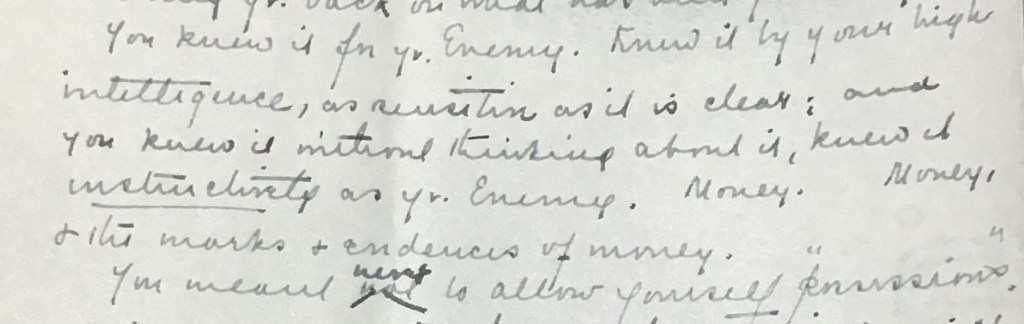
“You knew it for your Enemy. Knew it by your high intelligence, as sensitive as it is clear; and you knew it without thinking about it, knew it instinctively as your Enemy. Money. Money, & the marks & evidences of money.
You meant never to allow yourself “possessions.”…But you were goaded by 2 fine & lovely things: Your devotion for your wife (your passion to give her the things she coveted) & your passion for the beauty of the South. You came to think that you were keeping faith with yourself when you let your other self, your life “own” more & ever more by your sanctioning & finally by your procuring. Those “Possessions” were not yours, you still said. Apart from what they cost (you) what did you pay to keep those Possessions?
You paid the original Blessing of Chinsegut.
Externally, the place took on more & more something alien. Chinsegut became a splendid burden. In your integrity of mind you have again & again admitted this – the last time in writing to me – “it” [Florida] “is breaking me as it broke [our father]”
You said what you believed, but it is not Florida that has come near to breaking you & it was a different thing altogether that broke [father]. It was poverty broke him. Riches have come near to doing it for you.1
I have thought about this passage so often since first reading it two years ago.
It is profound because it shows clearly that having or lacking money may not be what determines success. It is your perspective on money that does.
Someone who makes life or moral decisions based on financial consequences is not free to follow their conscience or even to do what is in their best interest.
Think about it – how many times have you heard someone stay in a toxic work environment because they “can’t afford to quit?” Or have dropped healthy relationships to maintain unhealthy ones because the unhealthy person can financially benefit them?
I think this gives additional insight into Jesus’ words documented in Matthew 6:24,
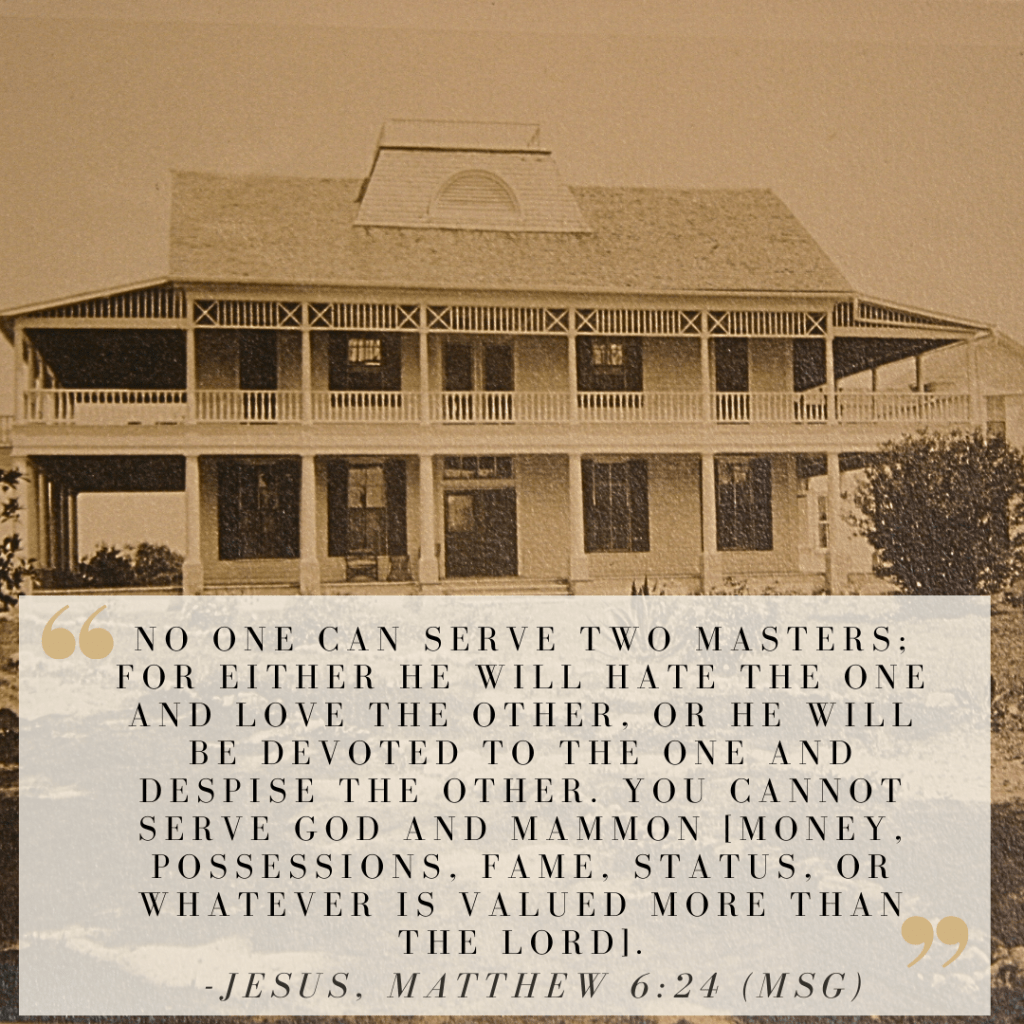
Making money the root of your decisions means money is your master. And that master has led to the corruption of beautiful dreams, healthy businesses, and happy communities. It has turned honest politicians into scoundrels and generous hearts into selfish ones. It has turned godly pastors and churches into terrifyingly ungodly pastors and churches.
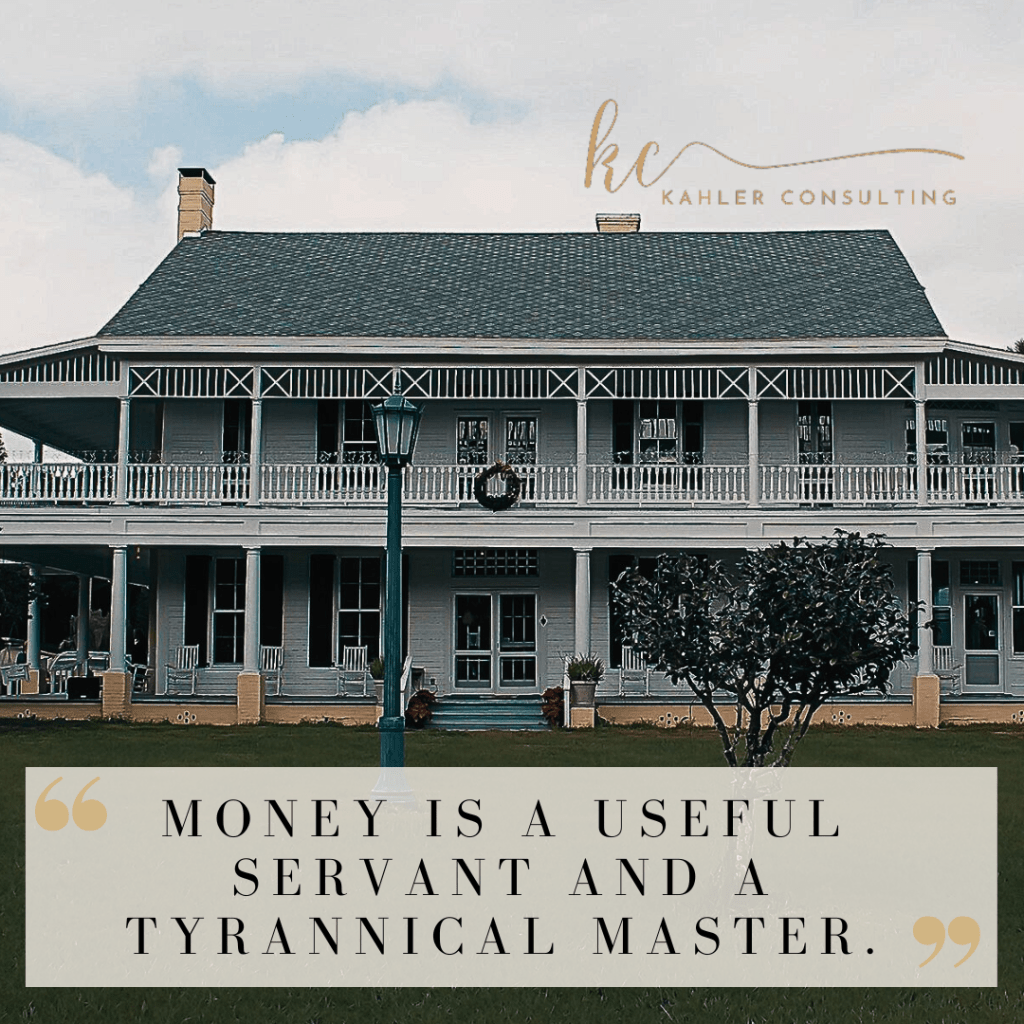
Money is a useful servant and a tyrannical master.
Elizabeth had witnessed Raymond’s extraordinary accomplishments in:
- dismantling the corrupt government in Nome, Alaska
- taking down mobsters
- bringing Robber Barons and their employees to the bargaining table for legitimate discussion
- negotiating with Vladimir Lenin and Leon Trotsky to feed hungry Russians
- accepting or turning down US Presidential appointments and assignments
Those feats were possible because money was not his master. He didn’t consider which position would make him more money; he simply considered what was morally best. Elizabeth hated to see his gifts and talents eroded by making money part of his considerations.
Raymond would eventually return to his root conviction of elevating conscience over money concerns, and led a 1932 turnover of corrupt government officials in Brooksville, Florida. He and his wife, Margaret, helped bring about the eight hour workday and successfully pushed for child labor laws. He found freedom in philanthropy and almost 100 years later, his Florida property, Chinsegut, still benefits all who use it.
Imagine how differently our lives would be individually and collectively if we followed his example in making conscience and not money, the basis of our decisions?
P.S. Check out my Patreon & podcast website for lots more about Elizabeth & a little more about Raymond
- letter from Elizabeth Robins to her brother Raymond, dated January-February 1931. Housed in the Elizabeth Robins’ Collection at New York University’s Fales Library ↩︎


Leave a comment